Tuesday, January 25, 2022

FARSCAPE: SEASON ONE (1999-2000)


PHENOMENALITY: *marvelous*
MYTHICITY: *fair*
FRYEAN MYTHOS: *drama*
CAMPBELLIAN FUNCTION: *cosmological, sociological*


If MARRIED WITH CHILDREN was truly first conceived under the rubric "Not THE COSBY SHOW," FARSCAPE could just as easily been termed "Not STAR TREK."

Though the TREK shows occasionally boasted a few sobering episodes, the dominant mood of the franchise was positive and uplifting. FARSCAPE was certainly not the first SF-teleserial with a cast of regular players that boasted a downbeat or ironic attitude. Both THE PRISONER and BLAKE'S SEVEN come to mind as significant predecessors. But FARSCAPE has the color and verve of a traditional space opera, with so many bizarre extraterrestrial forms that next to it, even the STAR WARS films look-- well, like any of the post-Classic versions of TREK in terms of polymorphous aliens.

In one of his many sardonic observations, viewpoint character John Crichton (Ben Browder) remarks that he has little in common with characters like "Kirk, Spock, Luke, Buck, Flash or even Arthur frelling Dent," comparing himself instead to Dorothy Gale. But a comparison to Lewis Carroll's Alice would seem even more appropriate. Astronaut Crichton ventures into space in an experimental craft, the Farscape (which I doubt ever gets mentioned in later episodes). Alice plunged into Wonderland through a rabbit-hole, while Crichton's craft is sucked into a wormhole, instantly teleporting him into a nether region of the galaxy, where illimitable alien races maintain a space-operatic interplanetary culture. 

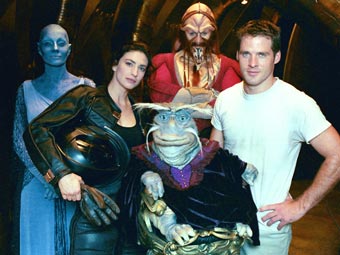
Crichton enters the new universe with a bang, accidentally crashing into the ship piloted by a "Peacekeeper," a member of a galaxy-spanning security force. The Peacekeeper is slain, but Crichton is taken aboard a Leviathan named "Moya," an organic quasi-cyborg spacecraft, commanded by several fugitives: husky warrior Ka D'argo (Anthony Simcoe), mystic Zhaan (Virginia Hey), imperious dwarf-alien Rygel and the ship's pilot, known only as Pilot. (Both Rygel and Pilot are "played" by Muppet-like figures supplied by the Jim Henson shop, though of course both are voiced by the people working the "strings.")  The fugitives escape their nemesis, other Peacekeeper ships, by using a space-warp, but they accidentally pull one of the Peacekeeper ships along with them. Once they're free of the other Peacekeepers, the fugitives of Moya bring the isolated officer aboard, and find that she's a female name of Aeryn Sun (Claudia Black). More Peacekeepers pursue, commanded by an officer named Crais, whose brother was slain in the accidental collision. Crais is not only set on capturing or destroying the fugitives, he even condemns Aeryn as having been contaminated by contact with the evildoers. Thus Aeryn too becomes a fugitive, with no goal save that of the others: trying to find some way to escape Peacekeeper vengeance in the known universe.

The small crew of Moya have no esprit d'corps at first; they rub each other the wrong way at the best of times, and all of them are particularly irritable with Crichton, the biggest fish out of his own galactic pond. Thus, whenever the characters make planetfall, Crichton gets to be the "dumb guy asking questions," to whom the local aliens can explain all sorts of local customs and biological anomalies. Despite that, though, the fugitives frequently get hoaxed by some planetary culture (an early episode plays like a reprise of Homer's "lotus-eaters" sequence), and not infrequently Crichton helps pull the motley crew together to get all of them out of danger. Halfway through the first season, the crew takes on yet another member: sprightly Chiana (Gigi Edgley), who adds considerable humor to the proceedings. 

Crais, though not seen in every episode, is a constant menace, though toward the end of the season the writers introduced a new Peacekeeper menace, an insidious torturer named Scorpius, who eventually replaces Crais as the Face of Corrupt Legality. I didn't think much of Scorpius as a continuing villain, but I'll set that subject aside in case I get to the later episodes.

The element of FARSCAPE most unlike TREK is that one never knows when the fugitives may succor one another, or suddenly turn on one another. In the first season's most memorable episode, "DNA Mad Scientist," a genetics expert offers the crew a biological map that will guide all of them back to their respective homeworlds. But the mad scientist's price for his services is that the fugitives must give him an organ sample from Pilot-- which entails slicing off an arm from a sentient being. Even though the script rationalizes that Pilot's species can swiftly regenerate, it's an unpleasant scene to watch, showing how deeply the crew-members are motivated by self-interest. Yet in another good episode, "A Human Reaction,"  Crichton plunges through another wormhole and ends up on what he initially thinks is his own Earth. In this tale, Aeryn, D'argo and Rygel all come looking for Crichton out of pure altruism, and they're treated badly by the supposed Earthmen before Crichton dopes out that he's not back in Kansas quite yet.

Now, one salient question is, is "Not STAR TREK" as good in its first season as the first year of Kirk and Spock? And the answer is no. It's a fine, engaging show, with a lot of bracing dramatic interplay. But perhaps because of the high cost of makeup and appliances in all episodes, a lot of stories in this season are either "fugitives get hoaxed by alien cultures" or "fugitives turn against one another from some strange influence"-- the latter plot leading to an awful lot of "bottle-shows." On the positive side, the scripts are always strong in articulating the concept of the living ship Moya and its relationship to its Pilot, particularly when Moya conceives an offspring. 

Still, even if FARSCAPE might not make my list of "ten best SF- teleserials with a regular cast," it would almost certainly make it into the top 20.
Monday, January 24, 2022

GENERATION X (1996)


PHENOMENALITY: *marvelous*
MYTHICITY: *fair*
FRYEAN MYTHOS: *adventure*
CAMPBELLIAN FUNCTION: *cosmological, psychological*


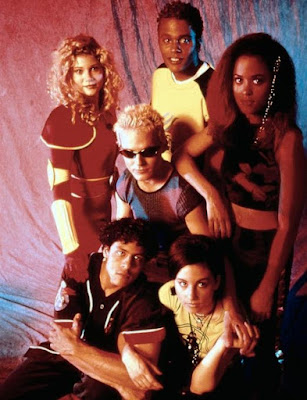
There was a time when Marvel Comics could barely get a decent live-action project off the ground. GENERATION X is one of the many misfires, adapting the same-name comics-series that had only appeared two years previous. Clearly the only reason this telefilm-pilot for a series that was never greenlighted was because someone wanted to see if they could tap into the popularity of the X-comics on a small TV budget. Four years later, of course, Bryan Singer demonstrated that, 1970s TV to the contrary, big-screen features would be the best way to make serious coin off Marvel properties.

For what it is, GENERATION  is at least watchable. The script is necessarily obliged to elide most references to the X-cosmos from which the source comic arose, except that now "Xavier's School for Exceptional Students" (aka "Mutant College") is run by Emma Frost, the White Queen (Finola Hughes). The script also draws on one element from the comics-character's history: that she had previously led another group of super-powered mutants who all died in combat, leaving Frost with a deep desire not to repeat past mistakes. She's aided by Banshee (Jeremy Ratchford), whose history with the school receives no elaboration, As in the comic books, the regular world is quite aware of the existence of mutants, and there's a Mutant Registration Act that enables the government to imprison the superhuman species. This sociological situation appears only in the setup scenes and does not affect the story except to emphasize why Frost's new group of young charges have to keep things on the down-low.

Two of the mutant students are more or less original characters, Buff (Suzanne Davis) and Refrax (Randall Slavin), while the other four are adaptations of such Marvel characters as Jubilee, M, Mondo, and Skin (respectively Heather McComb, Amarilis, Bumper Robinson, and Agustin Rodriguez). The performers all interact reasonably well, not getting along at first but finally bonding in a sense of mutant esprit de corps. None of the character interactions are memorable, though, so I for one have no regrets that these versions of the Gen-X'ers never appeared again.

The weakest link here is the decision to come up with a villain who had a loose connection with Emma Frost, though only in the sense of their being scientific rivals. Somehow the two of them were both involved in dream-research, and while Frost diverges into mutant research instead, her rival Tresh (an over-acting Matt Frewer) figured out how to tap into people's dreams for fun and profit. Not surprisingly, on a TV-movie budget, director Jack Sholder couldn't even come up with visual effects equal to the lesser moments of 1984's DREAMSCAPE.

Not a terrible movie, nor a "pretty good" formula flick, GENERATION X is mostly interesting as a curio.


Thursday, January 20, 2022

EVIL HAS A FACE (1996)


PHENOMENALITY: *naturalistic*
MYTHICITY: *fair*
FRYEAN MYTHOS: *drama*
CAMPBELLIAN FUNCTIONS: *psychological*

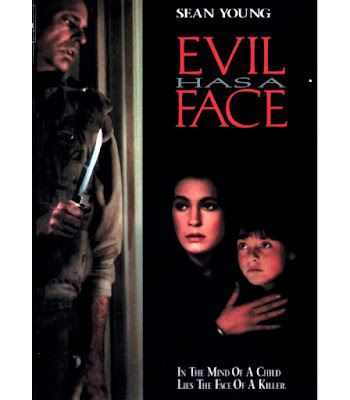
This forgotten telefilm was written and directed by one Rob Fresco, who racked up a lot of TV credits from the nineties on and is apparently still working these days. It's of interest to me first with respect to its place in my NUM theory and second because it offered Sean Young a pretty decent starring role in an efficient if never truly believable thriller.

Gwen McGarrell (Young) works as a police sketch artist in a big city. Gwen conveys little in her interactions with her fellow cops, projecting the attitude of being subtly "haunted." Then her services are requested in a small community called Redmond. Oddly, her Redmond liaison puts her up not in a hotel room, but in an old house where someone committed suicide, so that she's the first to sleep there since the event. This has nothing to do with the main plot, but it's certainly a macabre touch.

A little girl named Bria has recently disappeared, and Gwen accompanies local cops to the child's home to make a sketch of a possible kidnapper from a witness. However, that same day, Bria herself shows up at her home, having escaped her abductor. The viewer soon learns that Bria was molested before getting free, but before one finds that out, she exchanges a "significant glance" with Gwen, even though the two of them haven't even met yet-- which is as close as one can get to depicting a psychic connection without actually going there.

Gwen makes a sketch based on Bria's memories, presents it to the Redmond PD, and then belatedly realizes that she must have made a mistake, because the sketch looks like her own dead stepfather, who molested Gwen as a child before his supposed death. She tries to course-correct, but Bria insists that the face of the dead man belongs to her abductor. The cops try to convince Bria that she was really targeted by a known sex offender, and Fresco does keep the viewer guessing with a better than average red herring.

But guess what? The stepfather never really died, and he's apparently become a serial stalker of little girls (though there's some dialogue suggesting that he followed Gwen to Redmond, which makes even less sense than his resurrection). He still loves Gwen even though she's now a full grown woman, and Gwen must take on the role of a Lifetime heroine to protect Bria and to destroy the spectre who has haunted her life.

I can't claim that EVIL is anything strikingly original. But there are some touches in the music and cinematography departments that elevate this opus above the level of your typically artless Lifetime thriller.


THE UNHOLY NIGHT (1929)


PHENOMENALITY: *uncanny*
MYTHICITY: *poor*
FRYEAN MYTHOS: *drama*
CAMPBELLIAN FUNCTIONS: *psychological*

This early talkie is so statically filmed (by actor Lionel Barrymore, taking over from original assigned director Rupert "Phantom of the Opera" Julian) that I might've believed it was taken from some staid stage play. Instead, UNHOLY NIGHT was based on a short story by Ben Hecht, who would certainly craft many better known stories over his next thirty-plus years as a Hollywood scripter.  

The mystery gets a strong start, opening as a man is attacked in a dense London fog by a strangler. The man, Lord Montague (Roland Young), manages to escape, and when the police interview him they tell him that he's one of the few recent persons that the strangler didn't kill. The police let some of the names of earlier victims slip, and Montague recognizes that they're all former members of his regiment when it was stationed in Gallipoli. As it happens, the other members of the regiment are due to ring in the New Year at Montague's, and Scotland Yard attends the ceremony in hopes of finding out if the murderer will attend too.

After that opening, though, the film bogs down in lots of expository scenes. Two unexpected guests show up. One is Lady Cavender, an attractive young woman who just happens to be the daughter of a former regimental soldier who was executed for cheating at cards (not really, but the clumsy dialogue makes it sound like that). The other is Abdul (Boris Karloff), a Middle Eastern solicitor with a ghastly "where's that from" accent. Abdul reads the will of the late Cavender, who has left all the surviving members of the regiment a bequest, though each one will inherit more should any of the others pop off this mortal coil. In addition, Lady Cavender seems set on sowing dissension "in the ranks," as it were.

The murderer does strike again, and after some more victims die, he's revealed as the victim of a hypnotic spell by the true villain. A few lines of dialogue state that he might have dressed up like a "green ghost," but the viewer never sees this, just lots of talking heads. 

The only sources of entertainment here are Roland Young's comic stylings of the alcohol-loving Lord Montague and Karloff's terrible Eastern accent-- all the more remarkable in light of the very restrained voice he assumes for Ardath Bey in 1932's THE MUMMY. Karloff also had a small part in another Barrymore directorial work, THE SEA BAT, and had a much better role in a more well-known Hecht script for the original SCARFACE.


Wednesday, January 19, 2022

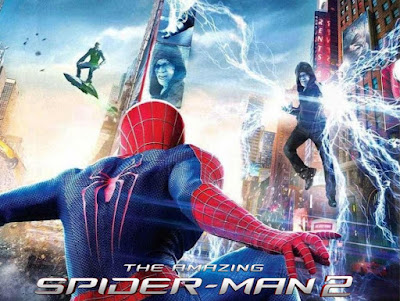
THE AMAZING SPIDER-MAN 2 (2014)


PHENOMENALITY: *marvelous*
MYTHICITY: *fair*
FRYEAN MYTHOS: *adventure*
CAMPBELLIAN FUNCTION: *cosmological, psychological*


In comparison to the relatively tight structure of the first Spider-flick starring Andrew Garfield, Number 2 makes some of the same "sophomore sequel" errors that have haunted superhero cinema since BATMAN RETURNS in 1992. One theory is that Sony was trying a little too hard to monetize the Spider-Man franchise by spinning off a franchise composed of multiple Spidey-villains, code-named "The Sinister Six" after a short-lived comics-story on a similar theme. With the recent success of the Sony/MCU collaboration on SPIDER-MAN: NO WAY HOME, Sony has started to make noises about another Sinister Six outing-- though I'm dubious as to how interesting these villains would prove without the hero himself in attendance. 

I won't quite say that the script-- all by new writers, except for some input from James Vanderbilt-- completely neglects the main character. Peter Parker (Garfield) still has numerous romantic woes with Gwen Stacy (Emma Stone). The first problem is that at the end of the first film, the hero promised Gwen's dying father that Parker would forego seeing Gwen to spare her any danger. But even though Parker has a few upsetting visions of being psychologically "haunted" by the image of Captain Stacy, the romance of Peter and Gwen can't be restrained by a commonplace superego-conflict. Since this problem gets too easily solved, Gwen is also presented with the promise of a new job if she leaves New York-- but a more tragic denouement, roughly lifted from a famous comics-story, will doom this Parker's first love-affair. Aunt May (Sally Field), having lost Uncle Ben in the first film, doesn't get any major arcs here, and J. Jonah Jameson is mentioned but never seen. But the earlier movie's allusions to Norman Osborn, mostly by mentioning his research company "Oscorp," bear fruit. 

Possibly in an attempt to distance this series from the Sam Raimi trilogy, Norman himself is first seen as a dying old man who never even comes close to becoming the Green Goblin. But SPIDER 2 also introduces Norman's son Harry, and he's rather quickly turned given an arc-- also one involving a fatal illness-- that will culminate in him becoming this universe's first goblin-themed nemesis. But far more time is devoted to Max Dillon, a nerdy engineer who works at Oscorp, who idolizes Spider-Man, but who soon becomes a new wall-crawler foe when an accident transforms him into Electro. 

The changes to Electro's background aren't objectionable, since the original comics-character was always something of a blank slate. Jamie Foxx does a decent job of capturing the electrical menace's shifts of emotion, but there's really not much to distinguish Electro from a million other movie-monsters moaning about their tragic transformations. More tellingly, the plotline involving Harry is rushed, forcing Garfield and Dane DeHaan to attempt selling the audience on their deep friendship with only a handful of scenes. The script's determination to shoehorn other villains as a prelude to a "Sinister Six" concept gets even worse at the climax, wherein Spidey fights a goofy version of The Rhino and a mystery villain is seen bringing together artificial weapons that would have been used for new versions of The Vulture and Doctor Octopus. 

Though I enjoyed NO WAY HOME's use of a "Sinister Five" (not including a cameo of Venom), I'm not sanguine about Sony seeking to expand the Spider-villains into their own franchise. The one thing I regret about the termination of the Garfield series is that both of the films had one fresh concept: to expand on the history of Peter Parker's deceased parents. In the comic books, Parker was so focused on his ties to his parental substitutes Aunt May and Uncle Ben that Stan Lee didn't bother saying much of anything about the actual Peter-parents for the first five years of the hero's existence. That led to one comics-story in 1968, and thereafter the Parkers went back into obscurity. But the writers of the Garfield films attempted to implicate the Peter-parents in the research that gave rise to the creation of Spider-Man-- and this might have been a fruitful new path for the series to have pursued. 


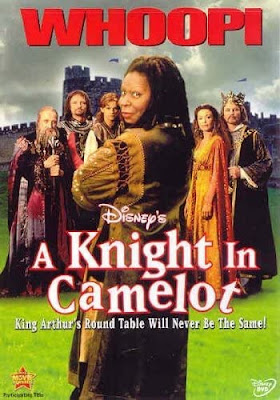
A KNIGHT IN CAMELOT (1998)


PHENOMENALITY: *marvelous*
MYTHICITY: *poor*
FRYEAN MYTHOS: *comedy*
CAMPBELLIAN FUNCTION: *sociological*


The unimaginative tag-line for this Disney TV-movie-- "King Arthur's Round Table will never be the same"-- sums up the witlessness of this umpty-teenth take on Mark Twain's A CONNECTICUT YANKEE IN KING ARTHUR'S COURT.

Whoopi Goldberg's career was going downhill at the time of this flick, though some might say that this dull KNIGHT is still better (in quality) than her hosting-job on THE VIEW. Goldberg mugs ferociously as Vivien Morgan, a scientist who experiments with gravity and accidentally triggers a time-dislocation, flinging her back to sixth-century Camelot, under the rule of King Arthur.

It's no surprise that the derivative script checks off most of the familiar tropes of the Twain novel. Time-traveler uses her foreknowledge to predict an eclipse? Check. Traveler aces out the phony wizard Merlin and uses modern science to establish her reign as "Sir Boss?" Check. Traveler gets involved in a duel with nasty knight Sagramore, which is played for baggy-pants comedy but still (just barely) qualifies for the combative mode? Check. (And was it really necessary to have King Arthur make Vivien into a knight the moment she makes the sun go bye-bye? Maybe the script could have led up to that development in some more subtle manner?)

Most of the new stuff, like Goldberg teaching the denizens of Camelot how to twist, is as lame as lame can be. There's a loose attempt to relate the rule of Camelot to the rise of American liberalism. Still, the writer wasn't as willing as Twain to banish all magic from Camelot, since at the end-- for which I'm not bothering to mention spoilers-- it turns out that the fake-seeming Merlin was really a super-farsighted sorcerer who arranged Vivien's trip. Some of the changes are more or less predictable. In the book Hank Morgan has an assistant named Clarence and marries a slave girl he names "Sandy," and the TV-script sticks these two characters together for some chaste teen romance. The book alludes to the eventual fall of Camelot because of the forbidden liaison of Lancelot and Guinevere, and so does the film-- but for some reason the writer makes Guinevere a real bitch instead of the usual star-crossed lover. Maybe this was the result of Amanda Donohue in the role, since she was inextricably associated with villainy. In the role of Arthur, Michael York has a nice speech toward the end. 


Tuesday, January 18, 2022

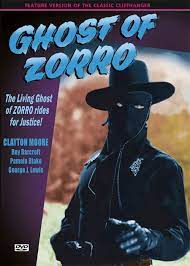
GHOST OF ZORRO (1949)


PHENOMENALITY: *uncanny*
MYTHICITY: *poor*
FRYEAN MYTHOS: *adventure*
CAMPBELLIAN FUNCTIONS: *sociological*


This was both the last and the least of the American "Zorro" serials, so maybe a better title would have been "giving up the Ghost of Zorro." 

Hero Ken Mason (Clayton Moore) is supposedly the grandson of the original masked cavalier, but aside from his having a Mexican guy serving as his aide-- presumably a parallel to the Bernardo character from the original stories-- there's no attempt to emulate the Zorro mythos. The serial follows a familiar template: a community-- sometimes just a town, sometimes a whole state-- is seeking to gain protection from American jurisprudence, while outlaw elements seek to keep the status quo. The script doesn't show us much of the outlaws' depredations, though there's an offhand comment that gangs like those of "Jesse James and the Daltons" use Twin Bluffs as one of their hideouts. Though the square citizens of the town don't know it, one of their upstanding citizens, Joe Crane (Gene Roth), is the secret leader of the gangs. When an elderly entrepreneur and his daughter Rita (Pamela Blake) try to set up a telegraph office that may lead to the ingress of lawmaking elements, Crane has the old guy killed. 

Fortunately, before he dies Rita's father invites a new engineer to help lay the wires, and this turns out to be Mason. Rita thinks he's an eastern dude, not knowing that Mason's forbears once owned land in that general area, though the script spends no time on these matters. When Mason finds out that lawless elements control the town, he takes up the mantle of his ancestor Zorro, supposedly to convince the crooks that he actually is Zorro's ghost, though Mason does not have any tricks to suggest any spectral nature. Thus none of the villains seem the least bit convinced that the new Zorro is anything but a masked mortal. The serial is largely composed of routine endeavors of Crane's thugs to undermine the telegraph, though one source of conflict doesn't stem from the outlaws. A gung-ho sheriff comes to town for a couple of episodes, trying to bring the vigilante Zorro to justice, and this almost leads to Mason being lynched-- which is the only time the serial becomes a little bit compelling.

The other principals are competent but there's little to work with here, even in the routine action-scenes. Unfortunately Clayton Moore only gets to use his own sonorous voice for Mason, while some other actor dubs Zorro's lines. The only real significance of this mediocre effort is that supposedly in the same year the serial was released, the casting people for the 1949 LONE RANGER teleseries got a look at GHOST, and so Moore secured the role, leading to a long association with that character, to the extent that many fans think of Moore as the quintessential Lone Ranger.