Friday, August 30, 2024

JOURNEY TO THE CENTER OF THE EARTH (2008), JOURNEY 2: THE MYSTERIOUS ISLAND (2012)


PHENOMENALITY: *marvelous*
MYTHICITY: *fair*
FRYEAN MYTHOS: *adventure*
CAMPBELLIAN FUNCTION: *cosmological*


Of these two loosely interrelated movies, the first, a fairly straight remake of Verne's classic SF novel, has much of the feel of the strong juvenile adventures that Walt Disney did in its heyday, not least in the company's 1950s adaptation of 20,000 LEAGUES UNDER THE SEA. Both JOURNEYS posit the idea of "Vernian science fiction," meaning that all the things Verne wrote about in his books were based on real phenomena in both his world and the world of the 21st century. (The second movie throws Jonathan Swift and R.L. Stevenson into the mix for good measure.)

Volcanologist Trevor Anderson (Brendan Fraser) is at a crossroads. He's about to lose his college department funding, but his research is his legacy to Trevor's long lost brother Max, who went missing while searching for the supposedly fictional "Center of the Earth." By coincidence, his sister-in-law asked Trevor to keep his nephew Sean (Josh Hutcherson) at his house while she's away doing whatever. The sulky thirteen-year-old doesn't want to be baby-sat by his uncool uncle, but by dumb luck the two of them stumble across a clue to the late Max's destination. So off they go to Iceland, to retrace both Max's steps and the course of Jules Verne's novel.

With the help of a sexy young mountain guide Hannah (Anita Braem) -- whom both the 13-year-old and probably 40-year-old ogle repeatedly-- they make their way to the supposed entry point. Though not intending to go spelunking, an accident forces them into doing so, whereupon in due time they discover that there is indeed a prehistoric world beneath the earth, including an internal sea. 

Verne kept his pocket "lost world" conservative, with only minimal sea life, and one big dino, encountered by his protagonists. Not surprisingly, the movie-writers introduce a lot more flora and fauna, not least the almost obligatory T-Rex. But I didn't mind, because the script is creative with its use of science-factoids to produce a good strong sense of wonder-- while also working them into the subplots of Sean bonding with Trevor and Trevor "bonding" (so to speak) with Hannah. A standout scene involves the three explorers on a raft, first being attacked by "jumping piranhas," and then being paralleled by plesiosaurs, who are only interested in feeding off the piranhas. The script even finds a novel way to redo the explorer's escape from the subterranean domain that takes inspiration from the novel but finds a different path to the same goal, and a justified happy ending.


JOURNEY did well at the box office, and that led to a sequel of sorts, in which Sean, played by a 17-year-old Hutcherson, has become a full-fledged Vernian, essentially inheriting the obsession of his father. His mother is now married to Hank Parsons (Dwayne Johnson), a former Navy codebreaker, but Hank has yet to bond with his stepson. So in his attempt to humor the kid, Hank agrees to translate a coded message that Sean believes was sent by his grandfather Alexander (Michael Caine), a Vernian obsessed with finding the supposedly fictional "Mysterious Island." Little does Hank realize that by helping Sean correlate a smattering of alleged clues about the Verne novel, TREASURE ISLAND and GULLIVER'S TRAVELS, Hank ensures that the two of them will soon be off island-hunting in Hawaii.

The unlikely duo engages a helicopter service to take them to the coordinates from the message, where no island is supposed to exist. The pilot is a comedy relief guy (Luiz Guzman) and his assistant is his comely teen daughter Kailani (Vanessa Hudgens), who's present to give Sean some romance (since he missed out the first time). A storm drives the copter into a crash landing, and guess what: there's the Mysterious Island, with no explanation as to why no one (except Grandpa Alexander) found the place before.

JOURNEY 2 had a complete change of director and writers. Yet even had the sequel used the same people who did CENTER, the core concept would have been undermined by the fact that Verne's MYSTERIOUS ISLAND novel doesn't involve giant creatures-- a reputation that arises only from the 1961 Ray Harryhausen movie. Nevertheless, once the four wayfarers find their way to Alexander, everyone acts as if finding giant bees and birds and dinos on the island agrees perfectly with Verne's book. A ticking-clock peril arises when the quintet realize that the island is rapidly sinking. But in this case, they are able to devise an escape using something from the actual novel: the continued presence of the Nautilus, the submarine left behind by the long-deceased Captain Nemo.

The FX are okay and most of the performances are adequate, though Johnson's "Big Tough Teddy Bear" schtick is getting pretty old. But in place of the first JOURNEY's sense of wonder, the writers provided only a lot of lame jokes for JOURNEY 2. Though I just watched the film, the only humorous bon mot I even remember is a slightly offbeat reference to "Mr. Mxyzptlk" of SUPERMAN comics.

IMPERATIVE CATEGORIES

The categories I introduce today have become more or less "imperative" because I've reviewed so many items on this blog that at times I myself lose track of some of the more obscure items I've covered. Hence, fourteen new categories will be added to new and old reviews over who-knows-how-long-a-time, so that I can easily remind myself which musty old Eurohorrors or chopsockies I've analyzed. These will be in addition to those already established, most of which involve my NUM formula or theories about the four mythoi of fiction. Most of the new subject headings should be self-explanatory, concerning various departments of popular culture or phenomena therein. Two or three new headings build on things I've written on the other blogs, but I won't trouble to delineate those since they concern my overall critical theory and will be of no use to the casual reader.


Tuesday, August 27, 2024

THE POSTMAN (1997)


PHENOMENALITY: *marvelous*
MYTHICITY: *fair*
FRYEAN MYTHOS: *adventure*
CAMPBELLIAN FUNCTION: *sociological*


Although I can see a lot of reasons why this Kevin Costner passion-project failed at the box office, and although I probably would have been bored watching in a theater, THE POSTMAN goes on my list of "interesting failures." This may be because I recently re-watched it on streaming, where I was free to pause this or that section as I pleased. But it's also because it was an attempt at producing a modern film in the vein of "Americana." More on that later.

Star-director Costner and two writers adapted the same-name 1985 novel by David Brin. I read the novel years ago and at the time liked it better than the film, though the main thing the POSTMAN film utilizes is the basic setup. It's 2013, and the mostly unexplained apocalypse has been recent enough that the older generation still remembers all of the events. The centralized government in the U.S. has been devastated, and as in most post-apoc films, the survivors have formed assorted small farming communities with little technology. But armed raiders have become the scourge of the countryside, levying tribute from the communities and threatening to become the de facto government. The raiders, named "The Holnists" after their deceased leader, are given a patina of sexism and racism, but their major evil is their insistence on a Spartan-like culture of military tyranny.

A wandering actor (Costner) travels from enclave to enclave, entertaining the residents with garbed Shakespeare performances. in contrast to the novel, the actor's name is never known. Then the current leader of the Holnists, General Bethlehem (Will Patton), decides to induct three men into his forces from the community the actor's visiting, and the actor is one of his victims. There's a little fencing between the actor and Bethlehem, in that both are familiar with the Bard, but for the most part, becoming an unwilling soldier is no picnic for our hero. He ultimately manages to escape the ranks of the Holnists.

On his own again, the protagonist comes across the long-deceased body of a U.S. postman. The actor appropriates the dead man's uniform and gets the idea of trying to deliver the leftover mail in order to cadge free food at communities. From then on, he becomes The Postman in much the same way that Clint Eastwood's hero from PALE RIDER becomes known as "Preacher." Why he never feels it useful to use his own real name, or to come up with a new one, goes unexplained.

As The Postman successfully mingles with one or two communities, his scam becomes his calling. His lie, that he's been empowered by a reconstituted U.S. government, becomes a dream that the scattered American tribes want to believe, and without his intent to do so, a new postal service grows into being. However, Bethlehem deems this organization a threat to his power, and he initiates reprisals. Coincidentally, he also abducts, for his own pleasure, a woman named Abby (Olivia Williams) -- though the general indirectly does the Postman an indirect favor by killing off Abby's husband, which will clear the decks for the romantic couple later on. Eventually, in marked contrast to the Brin novel, the quarrel of hero and villain is settled in a one-on-one battle.

Though Costner and his collaborators invoke paeans to the American Way of Life a little too often, and the film's length was surely one of the things that worked against it, the script does put across a strong sociological myth. The lines of communication, represented by the Postal Service, are what bind a country-- any country-- together, beyond the simple level of convenience, and such family-based community is exalted over the divisive nature of military culture.

POSTMAN, coming two years after the moderate success of WATERWORLD, may have done worse, but the script of the former isn't the only thing that's better. Costner, who was utterly unable to pull off the selfish loner of WATERWORLD, fits perfectly with this "hero of few words who can quote Shakespeare in a pinch." The star has good romantic chemistry with his leading lady, and Will Patton made an atypical villain: one who didn't look scary like the average adventure-antagonist but conveyed a sense of tangible menace. The climax, which builds upon the early events of the narrative, is in my book superior to that of the David Brin novel. 

Monday, August 26, 2024

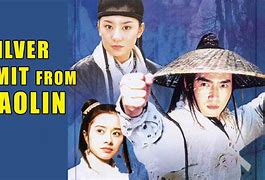
SILVER HERMIT FROM SHAOLIN (1980)


PHENOMENALITY: *marvelous*
MYTHICITY: *poor*
FRYEAN MYTHOS: *adventure*
CAMPBELLIAN FUNCTION: *metaphysical*


Well, if I ever wanted to say that I'd found THE kung-fu film that was most thoroughly out-of-control and incoherent, SILVER HERMIT FROM SHAOLIN, directed and adapted (from a Chinese novel) by lead actor Tien Peng, seems to win that honor.

Even a lot of the details of the film's title and character billing are erratic. Of course, a lot of HK chopsockies have many alternate titles. But while the HERMIT title is fairly accurate-- the main hero, in the dub I watched, is named "Silver Hermit"-- an alternate title, THE SILVER SPEAR, seems to combine the first part of the hero's name and the second part of the villain's name, that of "Shining Spear." As for character billing, going by a couple of different online reviews, there must be an alternate dubbed version out there, since it seems that that one cites a totally different English version of the hero's name, while changing the villain's to that of "Silver Spear." But there's still not a good reason to emphasize one of the bad guys, because he happens to be a stooge to the main evildoer.

The first 20 minutes of the film provides the overall setup and is the only comprehensible section before the movie devolves into chaos. A noblewoman named Green Jade, mistress of the Green Jade Villa in "Shaolin Valley," wants to find the greatest martial artist to marry her daughter and inherit the land. Four candidates venture to the valley and meet one another while waiting for a royal entourage to show up. Shining Spear (Tien Ho) offers water for all to drink, but only Silver Hermit (Peng) declines to drink. A strange woman comes bounding through the valley but then disappears, after which the three who drank succumb to poison in the water, though Shining Spear manges to live. When the courtiers arrive, they immediately assume that Silver Hermit poisoned everyone to dispose of his rivals. The accused man goes on the run.

Since Shining Spear survived the poison, Silver Hermit shows up at the former's house to ask for help. There Shining Spear reveals that he was totally responsible for the poison, having taken countermeasures to survive. He also frames the Hermit for the killing of Spear's wife. The royal courtiers show up and attack Hermit, who fights them off and flees. After he leaves, the mysterious bounding girl shows up, and it's revealed that she's the sister of Spear, and that both of them are servants of a master who has some sort of grudge against Green Jade. To serve his cause, the unnamed villain wants Spear to be the one to marry the young heiress.

But after that, everything goes to pot, and Peng's direction becomes aimless and frenetic. For once, it's clear that some of the incoherence stems from Peng trying to adapt sections of the novel, though his inability to be selective results in lots of incidents that go nowhere and characters who seem important but never appear again. For one quick example, a benefactor helps Hermit hide by pretending to be a merchant running a store. But he's also given a "wife," who's a woman without a memory, though she's pretty sure Hermit's not her husband. And then-- that plot vanishes into the ether.

A little interest is generated by the revelation of Spear's master: a vampiric being from Persia who goes by the name "Immortal." His grudge against the Villa is never revealed, though late in the film he has a brief fight with Green Jade, since Immortal says something like, "We meet again." I think that fight is the last time Immortal appears in the story but if he was defeated maybe the scene was omitted from my copy. 

Assorted scenes stitch the rest of the film together, but even the ones with a goofy feel just feel rather pathetic, like a scene where some guy chows down on nothing but raw eggs for some medical reason. Some kung-fu fights are filmed in darkness and hard to see, as if Director Peng was rushing through them. I assumed that "Doris Chen" (often billed as Lung Chung-erh) played the athletic sister of Spear, but HKMDB says she played "Petite Jade," which I suppose might be an alternative name for "Green Jade," since I can't remember any single actress being identified as the prospective bride. The only goofiness for which Peng's not responsible is certainly the creation of the dubbing people: when a Buddhist priest, who is apparently supposed to be speaking the sacred name "Amitabha," says something that sounds like "Amee-tofu."  

I just screened HERMIT yesterday and I've already forgotten the climax. This film makes the nutty FIREFIST OF INCREDIBLE DRAGON look positively linear by comparison.


Sunday, August 25, 2024

DRAGON SHOWDOWN (1966)


PHENOMENALITY: *marvelous*
MYTHICITY: *fair*
FRYEAN MYTHOS: *adventure*
CAMPBELLIAN FUNCTION: *metaphysical*

Long ago I saw on TV the English language version of this Japanese film, entitled MAGIC SERPENT, which allegedly had ten minutes cut out. This version aired on streaming with subtitles, suggesting that it represents the original cut of the Japanese production. Thus, I'll review it using the streaming title, even though the new English title also doesn't represent the literal Japanese title. I'm also informed that SHOWDOWN is a very free adaptation of a popular Japanese story, "Jiraiya," and indeed the hero of the movie changes his original name to Jiraiya over halfway through the story, so I'll refer to him by that name throughout the review.  

Jiraiya is a small child when usurpers-- the evil Daijo and his magician-ally Orochimaru-- slay Jiraiya's father Lord Ogata and Ogata's court. Some retainers escape with the child, but Orochimaru changes himself into a giant dragon and pursues the party. However, a huge eagle descends, claws the dragon's face, and bears Little Jiraiya away.

Ten years later, Jiraiya has become a young man (Hiroki Matsukata) living in forest-seclusion with his master Hiki, who has taught the young man both magic and swordcraft. Hiki changed himself into the eagle that saved the son of Lord Ogata because he had formerly been the tutor of Orochimaru (Ryutaro Otomo) before the latter turned his skills to evil. All of his life, Jiraiya has been honing his skills to overthrow the slayers of his family, and one day, the usurpers locate him. A small band of ninjas assault Jiraiya in the forest, but he defeats them all, in part through the use of magic in which his head detaches from his body-- easily the most memorable scene in the movie.

Once the ninjas are vanquished, Jiraiya also stumbles across a cute young woman nearby. He takes her presence for granted when she tells him she just happened by. In due time this will be revealed to be a falsehood, for the woman, name of Tsunade, is actually the offspring of Orochimaru. She's never met her father, though, and to some extent she attaches herself to Jiraiya so that she can get a chance just to meet the parent she never knew, just for her own peace of mind.

Like a lot of similar revenge-dramas, the first and third acts, depicting first the reason for revenge and then its culmination, are the strongest. The filmmakers adequately fill in the second act with incidental stuff-- Orochimaru seeking out Hiki and killing him, the introduction of a young boy with his own grudge against Daijo-- but not much of it is very memorable. But SHOWDOWN delivers a slam-bang kaiju finish, with Orochimaru's giant dragon fighting a giant toad conjured up by Jiraiya-- with the extra added attraction of a giant spider whipped up by Tsunade.  

Matsukata, who assumes a rather cheery attitude when not in battle, makes a good contrast with Otomo, whose dourness recalls that of the celebrated Toshiro Mifune. The FX are the main attraction, but I grade the mythicity as "fair" for having reproduced even the broad outlines of a famous myth, whether from folklore or literature. I was rather surprised that in one scene the soldiers of Daijo are shown bearing flintlock rifles, which presupposes contact with the Western world. This feels like a slight violation of the setting, since everything else in the movie invokes a world dominated by archaic magical beliefs. But for all I know, some literary versions of the original Jiraiya story may have crossed that line first. 


WARRIOR OF THE LOST WORLD (1983)


PHENOMENALITY: *marvelous*
MYTHICITY: *fair*
FRYEAN MYTHOS: *adventure*
CAMPBELLIAN FUNCTION: *cosmological, sociological*


In terms of excitement, WARRIOR isn't any better or worse than a half-dozen other post-apoc movies. But writer-director David Worth gets points for taking the usual story in a slightly different direction.

To be sure, Worth was probably largely a hired gun, since the main idea for the film came from Italian producers, and the finished film was first released in Italy under the title, "Vigilante of the Lost Earth." Because a lot of scenes in WARRIOR are fairly loopy-- while all the American films I've seen with Worth as director are very straightforward-- I think it's likely that the Italian producers instructed the American director to stick in various scenes designed to stoke the audience, whether the incidents depicted made much sense or not.

The post-apoc adventure-template provided by 1979's MAD MAX comes down to "Indians vs. settlers," in that the apocalypse-world has been reduced to small enclaves of people, often farmers, whom some band of evil ravagers constantly raid until a hero appears to defend the weak and the meek. WARRIOR is another apocalypse caused by a war involving "radiation," though radiation is only mentioned in the opening crawl and only once does the viewer see "mutants" who were presumably the victims of fallout. Otherwise, this time the destruction of civilization engenders a conflict more like "good mystics vs. Big Brother."

In some desolate part of the future U.S., a tyrant named Prosser (Donald Pleasance) has organized his subjects into "Omega," a dictatorship based on total mental control, either by propaganda or by brainwashing. Not far from Omega is a mysterious realm rendered invisible by a illusory cliffside-wall, where dwell the Elders of the New Way. The head of the New Way, an older man named McWayne, is kidnapped by Prosser's forces and held in Omega, presumably for purposes of brainwashing.

Along comes the unnamed man known as "The Rider" (Robert Ginty), riding his talking motorcycle and fresh from kicking the asses of a gang of wilderness marauders. He crashes into the illusion-wall and breaks into the base of the New Way. When he wakes up, Rider is informed that the Way-ers (including an unnamed character played by Fred Williamson) think that he's "pure of heart" because he was able to pass through the wall at all. They ask this guy they've never seen before to help rescue McWayne. Rider refuses until McWayne's hot daughter Natassia (Persis Khambatta) points a pistol at his privates. Rider then agrees to the mission but asks what he gets out of the arrangement. Natassia's response comprises one of those loopy moments that may've meant more to Italian audiences: she lifts the gun and fires it straight up. Is it her promise to sex up the hero if he cooperates? Who knows?

So Rider and Natassia both don the outfits of Omega's menial laborers and travel through an underground tunnel to infiltrate Prosser's domain. After the brief aforementioned meeting with some mutant scavengers, the heroes enter Omega. In short order they watch an erotic dance by male and female performers, which is apparently a reward to workmen for their service, and then end up watching the execution of two rebels against Prosser's regime. However, when McWayne is brought out to suffer the same fate, Rider and Natassia grab a couple of machine guns and start sbooting guards. With the help of a small plane, Rider escapes with McWayne. Natassia though is captured, and Prosser subjects her to his brainwashing machine.

Here's Loopy Moment #2: McWayne somehow persuades Rider to take him to an area where a bunch of colorfully costumed warriors are fighting one another to be top dog. McWayne also talks Rider into joining the free-for-all, and when he's last man standing, he becomes the de facto leader of the raffish crew. They attack some of the outposts of Omega while Rider makes a frontal assault on Prosser's fortress with that talking motorbike (which, since I've not mentioned it, utters hipster-phrases like "tubular" and "hold on hotshot.') Prosser sends forth an invincible automated battle-truck called Megaweapon, and although the talking motorbike is destroyed, Rider manages to short circuit the big assault-vehicle. 

Somehow Rider rendezvouses with McWayne, and the two of them find their way to Prosser's office. Prosser engages the heroes in banter for a while. During this scene, the viewer may note that Prosser wears one black glove, not unlike Doctor No in the Bond film of that name-- thus providing a slight reminder of Pleasance's own status as a former Bond villain.

Then Prosser unveils his ace in the hole: the brainwashed Natassia. Prosser commands her to shoot both her father and her possible future-lover. Rider, she shoots without hesitation, though by dumb luck she does not kill him. But when faced with the possibility of killing her dear daddy, Natassia empties her gun into evil Prosser.

Omega is thus instantly overthrown and all the New Way-ers celebrate with balloons and confetti (?) But Rider, being the archetypal loner-hero, won't settle down. So he settles for sucking face with Natassia for a couple minutes, and then rides off into the sunset on his rebuilt motorbike, which isn't heard to utter any sassy chat. However, Worth also filmed a coda establishing that Natassia only killed a clone of Prosser, so that the villain is still alive to "strike back" in a sequel-- which never came about.

Kinski is sexy, Ginty displays his laid-back charm, and Pleasance utilizes his silky-smooth voice to convey absolute villainy, so all of those are pluses. The action scenes are anemic and convey no excitement, but in this case at least, I prefer the emphasis on wacky stuff.


Friday, August 23, 2024

THE MAGIC CARPET (1951)


PHENOMENALITY: *marvelous*
MYTHICITY: *poor*
FRYEAN MYTHOS: *adventure*
CAMPBELLIAN FUNCTION: *sociological*

I saw CARPET long ago and remembered little about it but the unusual presence of Lucille Ball in a Hollywood "Arabian knockwurst" (my term for all the low-budget Oriental fantasies that got ground out like sausages). While producer Sam Katzman was never known for excellence in any genre, I have found that a couple of his Oriental sausages were silly fun, such as THIEF OF DAMASCUS and THE SIREN OF BAGDAD. Additonally, CARPET's director was Lew Landers, who produced some favorite horror-films, such as the 1935 RAVEN and THE RETURN OF THE VAMPIRE. Unfortunately, this flick, which as far as I can tell was Katzman's first venture in Arabian Nights terrain, is ordinary in every way.  

At least the film starts off with action, as some Caliph (let's say it's in Baghdad) getting assassinated on the same day he proclaims the birth of his newborn son. The Caliph's court is massacred and a usurper named Ali (Gregory Gaye) takes over, along with his vizier Boreg (Raymond Burr) and Ali's capricious sister Narah (Ball). However, a servant escapes with the newborn with the aid of the titular flying carpet. The dying servant leaves the infant and the carpet with a virtuous couple, and the carpet is squirreled away while the couple raises the boy as their own over the next twenty years. The child grows into the man Ramoth (John Agar), and once he's an adult Ramoth is mighty wroth with the tyrannies of Caliph Ali. In approved Zorro fashion he fabricates a masked identity, The Scarlet Falcon (though he's not often seen masked) and organizes a resistance movement.

All the familiar swashbuckling tropes are dutifully hauled out. A beautiful young woman named Lida (Patricia Medina) joins the rebellion against the Falcon's wishes, and of course the two fall in love, though she doesn't prove to be much of a fighter. Ramoth gets a chance to infiltrate the Caliph's palace by curing Ali's long spate of hiccups (don't ask), but I'm blamed if I remember what comes about because of this action. I also forget how Lida becomes a member of Narah's harem, which leads to a minor set-to when Narah slaps Lida. (Medina claimed in an interview that Ball hit her for real.) Neither the hero nor the villains seem to do much of anything but run through the motions, until the moment that Ramoth is informed of his heritage and of the secret weapon of the flying carpet, which the hero uses to overcome the villains and be united with his lady love. Oh, and Ramoth gets to swordfight Boreg, so there's that.

Though I imagine the use of the carpet was inspired by the climax of the 1940 THIEF OF BAGDAD, the extremely paltry special FX probably didn't inspire even the most uncritical viewers in 1951. Some of the lead actors in these knockwursts have brought a little charisma to the formula stories, but John Agar is horribly dull in the role, and even Medina, who played many such exotic roles, can't do anything with her part. Of the three villains, Ball gets the best lines and is almost the only reason to see the movie, which premiered days before the launching of her successful I LOVE LUCY teleseries. Ostensibly Ball, who had never quite hit her stride on the big screen, had to complete some obligation to Columbia Pictures and accepted the role even though she knew CARPET was junk. Her breakthrough as a TV comedienne gave her a second life in cinema, though she still dominantly worked in TV. But for what little it's worth, this moldy oldie is the only time actors like Ball and Agar delved into the domain of the superhero-adjacent fantasy.